
Why Are Playdough Tools Important for Early Childhood Education?
Playdough is a classic childhood activity, but it can be much more than a fun way to keep little hands busy. When children use playdough tools such as rolling pins, cutters, stamps, rollers, scrapers, and shape molds, they turn simple dough play into an engaging hands-on learning experience. For preschool teachers, early childhood educators, and parents, playdough tools can support fine motor development, hand-eye coordination, creativity, problem-solving, early math concepts, language development, and social skills.
The National Association for the Education of Young Children (NAEYC) specifically recognizes clay dough as an activity that allows children to roll, squeeze, poke, pound, shape, cut, and manipulate materials while developing small-muscle control in their hands and fingers.
So, why are playdough tools important for early childhood education? Let's explore how these simple tools can turn play into meaningful learning.
What Are Playdough Tools?
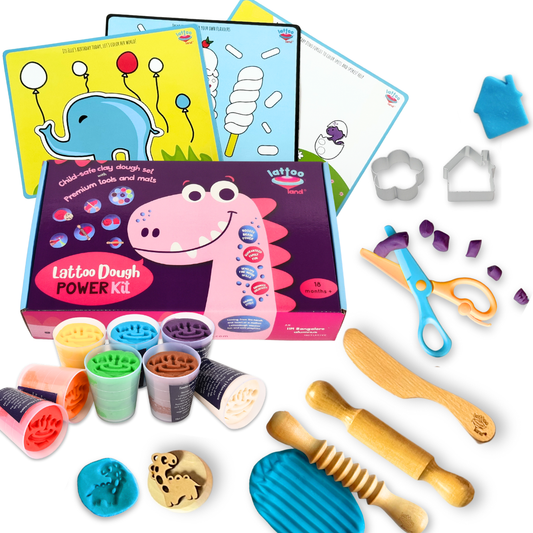
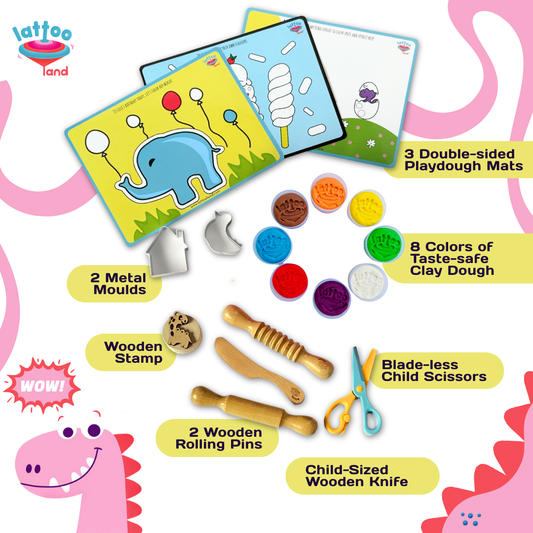
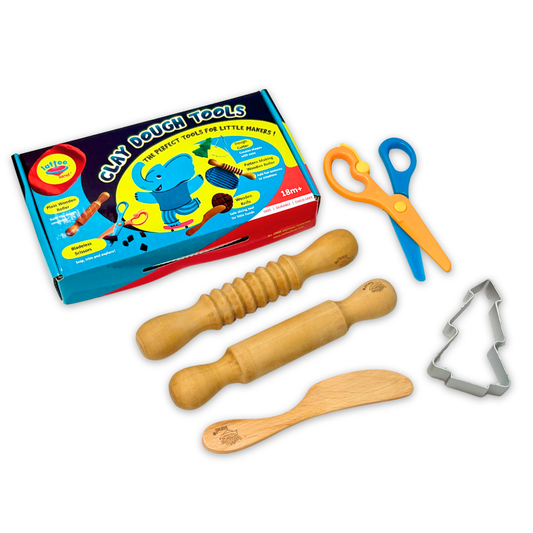
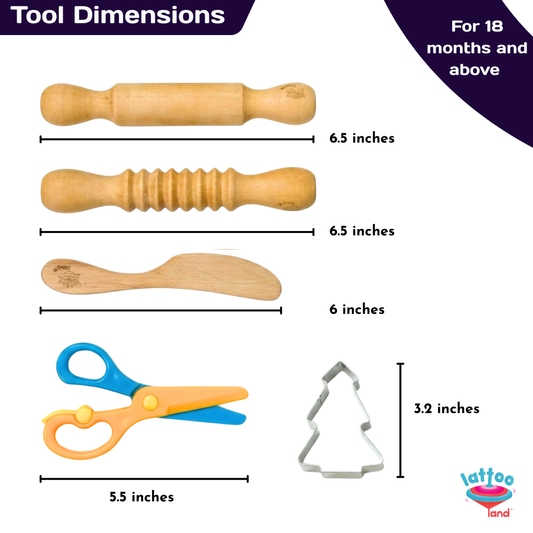
Playdough tools are child-friendly accessories designed to help children manipulate and create with dough. Common examples include:
-
Rolling pins and dough rollers
- Plastic cutters
- Shape molds
- Stamps and stampers
- Dough knives and scrapers
- Texture rollers
-
Scissors designed for playdough
- Extruders and presses
- Shape and pattern tools
Children can use these tools individually or combine several tools to create imaginative objects, patterns, pretend food, animals, letters, numbers, and more.
The important part is not simply having a large collection of tools. It is giving children opportunities to experiment, make choices, and discover what different tools can do.
1. Playdough Tools Support Fine Motor Development
One of the biggest educational benefits of playdough is the opportunity to practice movements involving the small muscles of the hands and fingers. Children may squeeze dough, pinch small pieces, roll it between their hands, flatten it, poke it, cut it, or press it into molds. Adding tools introduces even more varied hand movements.
For example:
- Rolling a dough roller requires controlled hand movements.
- Pressing a stamp requires pushing and releasing.
- Using a cutter involves positioning and applying pressure.
- Pinching dough exercises finger control.
- Scraping dough requires coordination between the hands and eyes.
NAEYC notes that playdough activities can help children develop hand and finger strength, dexterity, and eye-hand coordination skills used later for activities such as drawing and writing. However, playdough should be viewed as one of many hands-on activities that contribute to fine motor development, rather than a guaranteed way to teach handwriting.
2. They Encourage Hand-Eye Coordination
Hand-eye coordination involves using visual information to guide hand movements.
Playdough provides a natural opportunity to practice this skill because children constantly look at what they are doing and adjust their movements.
For example, a child trying to:
- Cut along the edge of a flattened piece of dough
- Place a stamp in a specific location
- Roll dough into a particular size
- Press a shape into dough
- Create a row of repeated patterns must coordinate what they see with how their hands move.
These small challenges make playdough activities useful for preschool and kindergarten classrooms where children are developing greater control over their movements.
3. Playdough Tools Make Learning More Hands-On
Young children often learn effectively through active exploration.
Instead of simply being told what a circle, square, triangle, or number looks like, children can create these shapes using their hands.
A teacher might say:
“Can you make three circles?”
The child can roll, flatten, cut, and count the shapes while physically interacting with the material. This type of hands-on experience can make abstract ideas more concrete and engaging.
4. They Introduce Early Math Concepts
Playdough tools can be easily incorporated into preschool math activities.
Children can practice:
- Counting
- Sorting
- Matching
- Comparing sizes
- Recognizing shapes
- Creating patterns
- Measuring
- Understanding more and less
- Exploring symmetry
For example, a teacher could ask a child to make five small balls, three large balls, or a pattern using two different shapes.
Children can also compare their creations:
- “Which one is longer?”
- “Can you make a bigger circle?”
- “How many stars did you make?”
These simple questions turn creative play into an opportunity for mathematical thinking.
5. Playdough Encourages Creativity and Imaginative Play
One of the greatest advantages of playdough is that there is rarely only one correct answer. A child can turn the same piece of dough into a pizza, flower, dinosaur, road, cupcake, person, or completely imaginary object. Playdough tools provide additional possibilities without dictating exactly what the child must create.
For example, a rolling pin can become a tool for making roads, a cutter can create pretend cookies, and stamps can create patterns. This open-ended nature allows children to make decisions and experiment with their own ideas.
6. They Encourage Problem-Solving
Playdough play often presents children with small challenges that encourage them to think, experiment, and find solutions. A child may try to build a tall tower only to see it fall, attempt to create a specific shape but find the dough too thick, or discover that one tool works better than another. These everyday moments encourage children to experiment with different ideas, try new approaches, and learn through hands-on problem-solving.
Instead of immediately correcting the child, adults can ask questions such as:
- “What could you try next?”
- “What happens if you roll it thinner?”
- “Which tool might work better?”
- “How can we make it stronger?”
This encourages children to think about cause and effect and try different approaches.
7. Playdough Tools Can Support Language Development
Playdough is also an excellent conversation starter that supports language development during hands-on play. As children play, adults can naturally introduce descriptive and action words such as roll, press, flatten, cut, squeeze, smooth, rough, thick, thin, large, small, circle, triangle, pattern, and texture, along with concepts like heavy, light, more, and less. Pretend play adds another layer of language development by encouraging children to express ideas and create stories. For example, a child creating a pretend bakery might talk about making cookies, taking orders, serving customers, and counting pretend food, helping build vocabulary, communication skills, and confidence through imaginative play.
8. They Support Social Learning in Classrooms
Playdough does not have to be a solitary activity; it can be a wonderful way for children to develop social skills through shared play. In a preschool classroom, children can gather around a playdough table, exchange tools, take turns using popular cutters, share ideas, and talk about their creations. Teachers can also introduce collaborative activities, such as “Let’s build a playdough garden,” where one child makes flowers, another creates vegetables, and another adds insects. These shared activities give children opportunities to practice communication, cooperation, sharing, and turn-taking while enjoying creative play. Playdough activities with peers, siblings can also provide natural opportunities for children to learn how to work together and respect others during play.
9. Playdough Tools Can Make Sensory Play More Engaging
Playdough is a naturally tactile material that allows children to explore softness, resistance, texture, and shape through hands-on manipulation. Adding different tools expands these sensory experiences by introducing new ways to interact with the dough. For example, a texture roller creates a different surface than a smooth roller, while stamps leave distinct imprints and cutters transform the dough into different shapes. These simple activities encourage children to explore texture, pressure, movement, and cause-and-effect relationships through active play. For children who enjoy sensory experiences, a well-organized playdough station can become an engaging part of a preschool classroom’s sensory and creative-learning environment.
10. They Make It Easy to Create Educational Playdough Activities
One reason playdough is popular in early childhood classrooms is its versatility. Teachers can connect playdough activities to different themes throughout the year.
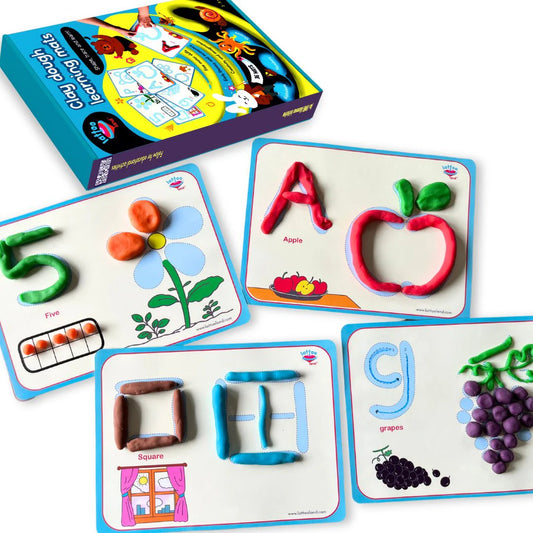
- Alphabet Activity : Ask children to form letters from dough or press letter stamps into flattened dough.
- Number Activity : Have children create a specific number of balls, shapes, or objects.
- Shape Activity : Use cutters to introduce circles, squares, triangles, rectangles, and other shapes.
- Nature Activity : Invite children to make flowers, leaves, insects, or trees.
- Pretend Bakery : Children can create pretend cookies, cupcakes, pizzas, and other foods.
- Pattern Activity : Create simple patterns such as : circle → star → circle → star Then ask children to continue the pattern.
These activities allow educators to combine play with age-appropriate learning goals without turning the activity into a worksheet.
How to Choose Playdough Tools for Preschool
When selecting playdough tools for young children, prioritize age appropriateness, durability, ease of use, and safety.
Look for tools that:
- Are appropriately sized for children's hands
- Have smooth, child-friendly edges
- Are easy to clean
- Are durable enough for classroom use
- Offer different types of manipulation
- Encourage open-ended creativity
- Match the manufacturer's recommended age range
Adults should always supervise children according to the product's instructions and avoid tools or small accessories that are not appropriate for the child's age. It is also useful to start with a small selection of tools rather than overwhelming children with too many choices. A rolling pin, a few cutters, stamps, and a scraper can provide plenty of opportunities for exploration. The goal is not to create a perfect finished product. The learning often happens during the process of squeezing, rolling, cutting, testing, changing, and trying again.
Playdough tools are valuable in early childhood education because they transform a simple material into a flexible, hands-on learning resource. The right tools and adult guidance, children can practice fine motor movements, hand-eye coordination, early math concepts, language, creativity, problem-solving, sensory exploration, and social interaction all while engaging in enjoyable play.
That is what makes playdough tools much more than simple accessories they can become practical tools for playful early learning.
Tags:
Previous
What Are Scissor Skills and Why Are They Important for Preschoolers?
Next
Why Parents Prefer Non-Toxic Finger Paints for Early Learning and Sensory Play
Related articles
Why Sensory Art Matters in Early Childhood
Oct 14 2026