Play Scarves
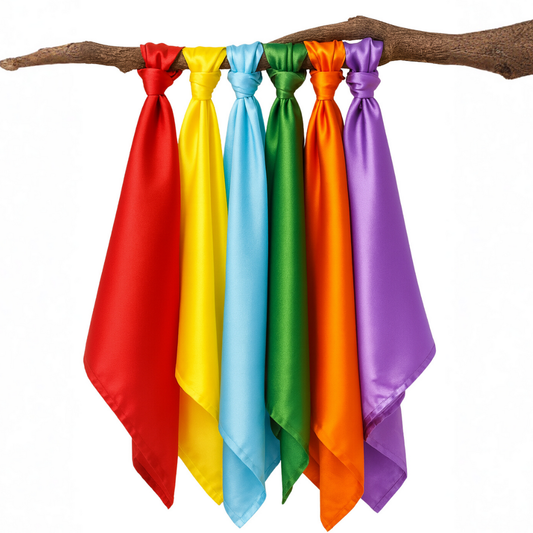
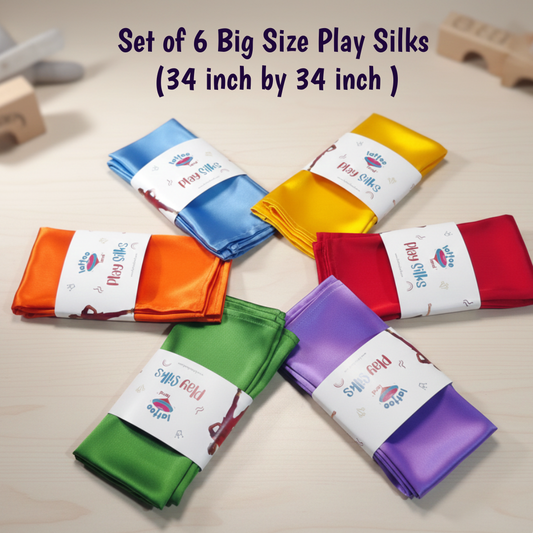
A cape, a river, a roof — whatever the child decides. Lightweight, semi-sheer play silks that stretch from peekaboo with babies to fort building at eight. A Waldorf and Montessori staple.
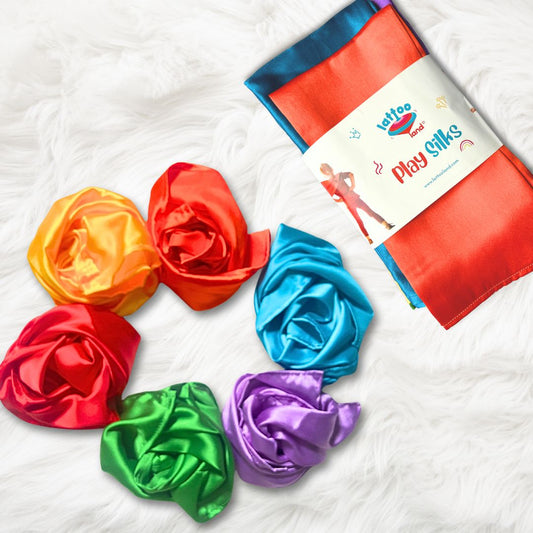
- Featured
- Most relevant
- Best selling
- Alphabetically, A-Z
- Alphabetically, Z-A
- Price, low to high
- Price, high to low
- Date, old to new
- Date, new to old
- Featured
- Most relevant
- Best selling
- Alphabetically, A-Z
- Alphabetically, Z-A
- Price, low to high
- Price, high to low
- Date, old to new
- Date, new to old
Filter
Category
Colorful Sensory Play Silk for Toddlers | Rainbow Play Silk | Music and Dance Scarves | 20 by 20 inch
Sensory Play Silk for Kids 3-8 years | Superhero Capes | Pretend Play | Montessori and Waldorf
Learn More
What Are Play Scarves? Open-Ended Play Explained
A play scarf becomes whatever a child decides it is: a cape, a river, a roof, a baby's blanket, a bird. That is the entire point. Lightweight and semi-sheer, it is one of the few toys that genuinely spans infancy to age eight, because the child supplies the meaning rather than the object.
This is why Waldorf and Montessori settings use them so heavily. A toy that already knows what it is leaves nothing for the child to invent. A plain length of colored fabric leaves everything.
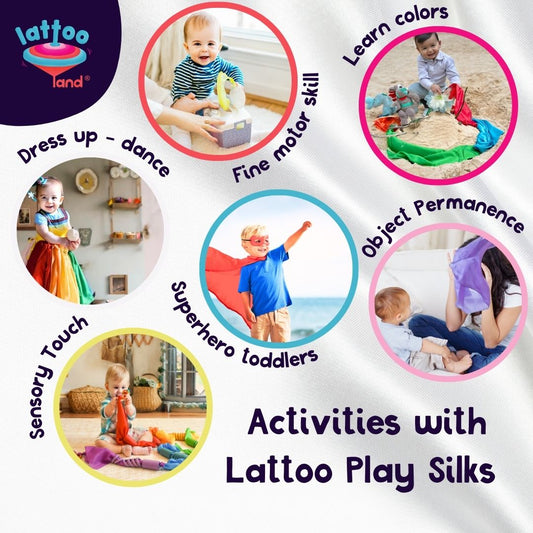
How they get used: dress-up and dance, small-world scenery, movement and music games, fort building, and peekaboo with babies.
Ways to Play, Safety & Care
- Babies: peekaboo and visual tracking, always with an adult present.
- Toddlers: throwing, catching, and dancing, which build gross motor confidence.
- Preschoolers: capes, costumes, and dress-up for open-ended storytelling.
- Older children: small-world scenery, dens, and fort building.
Safety: supervised play only. Loose fabric must never go into a crib, bassinet, or any sleep space, and children should not wrap scarves around the head or neck.
Care: hand wash in cool water and lay flat to dry. Skip the tumble dryer, which dulls the color and weakens the weave over time.
Frequently Asked Questions About Play Scarves
Q. What are play scarves used for?
A. Anything the child decides. Common uses are dress-up capes, peekaboo with babies, dancing and movement games, small-world scenery, and fort building. They are deliberately open-ended.
Q. What age are play scarves for?
A. Infancy through around age 8, which makes them one of the longest-lasting toys available. Supervision is required at every age.
Q. Are play scarves safe for babies?
A. Yes for supervised, awake play. Never place a scarf in a crib or sleep space, and do not let children wrap fabric around the head or neck.
Q. How do I wash a play scarf?
A. Hand wash in cool water and lay flat to dry. Avoid the tumble dryer, which fades the color and weakens the fabric.
Q. Why are these used in Waldorf and Montessori settings?
A. Because they are completely open-ended. The child assigns the meaning, which is the kind of imaginative work both approaches are built around.
Q. How many scarves do we need?
A. Two or three is enough to start. Multiple colors extend the play, since children begin assigning different meanings to each one.
Explore More Collections
Shop by Category
Clay Dough for Kids | Sensory Bin Fillers | Montessori Toys | Sensory Play Tools | Themed Sensory Kits | Printable Worksheets
Shop by Age
Baby Toys (0-18 Months) | Toddler Toys (18 Months-3 Years) | Preschool Toys (3-5 Years) | Kids Activities (5-8 Years)
Gifts & Occasions
Best Sellers | Party Favors & Return Gifts | Diwali, Holi & Rakhi Kits